
What can happen when you write about your family history
After you leave, I will count the silver.
I often hear this joke at celebrations and parties. The jokers have read my book and know that two of my ancestors were leaders of a gang of burglars in The Hague.
Fortunately, there are also positive aspects to publishing research about your own family.
One of them is that I occasionally come across stories that are new to me. The story that moved me the most was one I received from a new Facebook friend who had seen my books at the Kamp Westerbork Memorial Center.
Is Sjoerdje Letterie your mother?
she asked me. When I replied that she was my grandmother, she told me the story of her father-in-law.
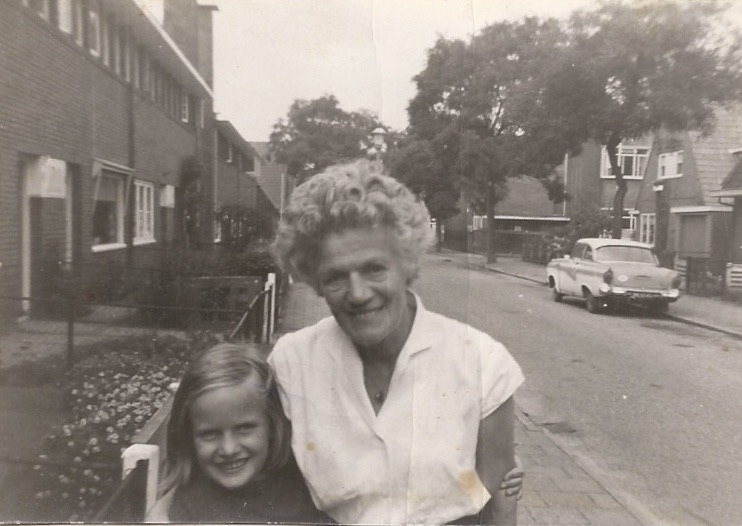
Her father-in-law’s surname was Pel and he was a shoemaker in Hilversum in 1944. My grandmother also lived there with her three children at the time. Her husband, my grandfather Martinus, had been arrested in 1941. At the end of January 1942, she learned that he had “died” in the Neuengamme concentration camp.
Raid in Hilversum
On Monday morning, October 23, 1944, Hilversum was hermetically closed off. Heavily armed Germans scoured street after street in search of men between the ages of sixteen and fifty who were to be sent to Germany for forced labor. ShoemakerPel also fell into the hands of the soldiers. He was among a group of several hundred other men who were rounded up on the grounds of the Nederlandse Seintoestellen Fabriek. This was a factory that bordered the garden behind my grandparents’ house. The final assembly point was the sports park, from where nearly four thousand citizens of Hilversum were later transported to Amersfoort.
Before that happened, shoemaker Pel managed to escape when no one was looking. He jumped over the fence surrounding the factory grounds and landed in my grandmother’s garden, where she was scrubbing laundry.
She immediately pushed him into the back room of her house, closed the sliding doors, and drew the curtains. The Pel family recounts that Sjoerdje hid his father(-in-law) in the basement, but the house didn’t even have one. The shoemaker was simply in the back room.
Meanwhile, the Germans searched house to house for the escaped man. My grandmother told them that he had run across the house and showed them the direction in which he had disappeared. Sjoerdje sent her eldest son and my father Frank with a message to the Pel family to inform them that their husband and father had escaped. In the evening, when the danger had passed, shoemaker Pel left and returned to his family.

When Pel had a son some time later, he named him Sjoerd, after the woman who had saved him. The woman who told me this on Facebook was the wife of Sjoerd himself. The story of my brave grandmother is still alive and being told in their family. Through my work as a writer, the story found its way to me. To me, this feels like a gift.
A role model
This story touches me not only because I loved my grandmother, who often seemed much stronger than she actually was. It also moves me because I know how deeply the loss of her husband affected her. My father sometimes says that she actually died of grief. I am impressed that she knew immediately what she had to do and acted without hesitation, even though she was aware of the danger this meant for her. This is why she is a role model for me and why I am glad that we named our eldest daughter after her.
This article was previously published in Gen.magazin 2016-4.