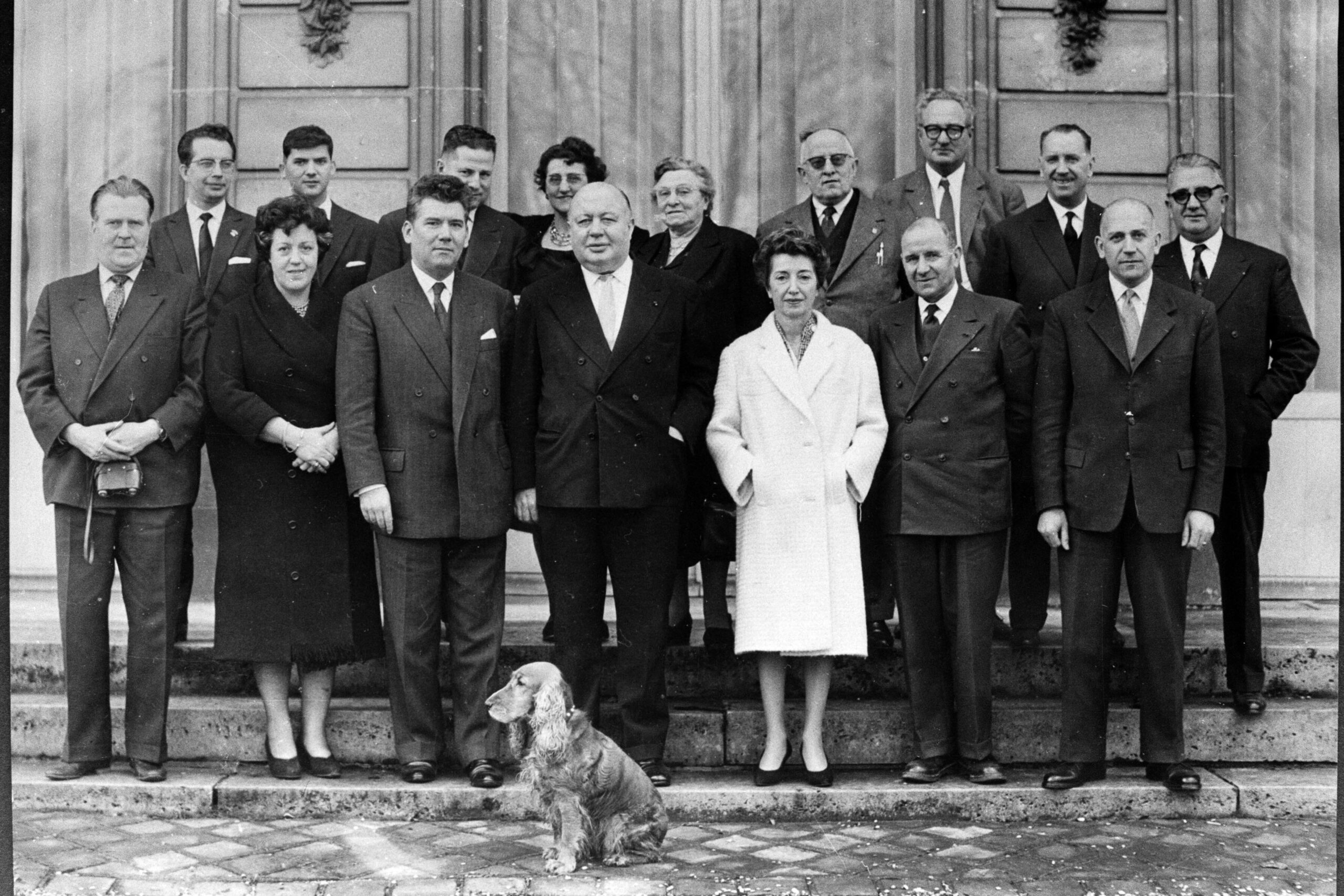
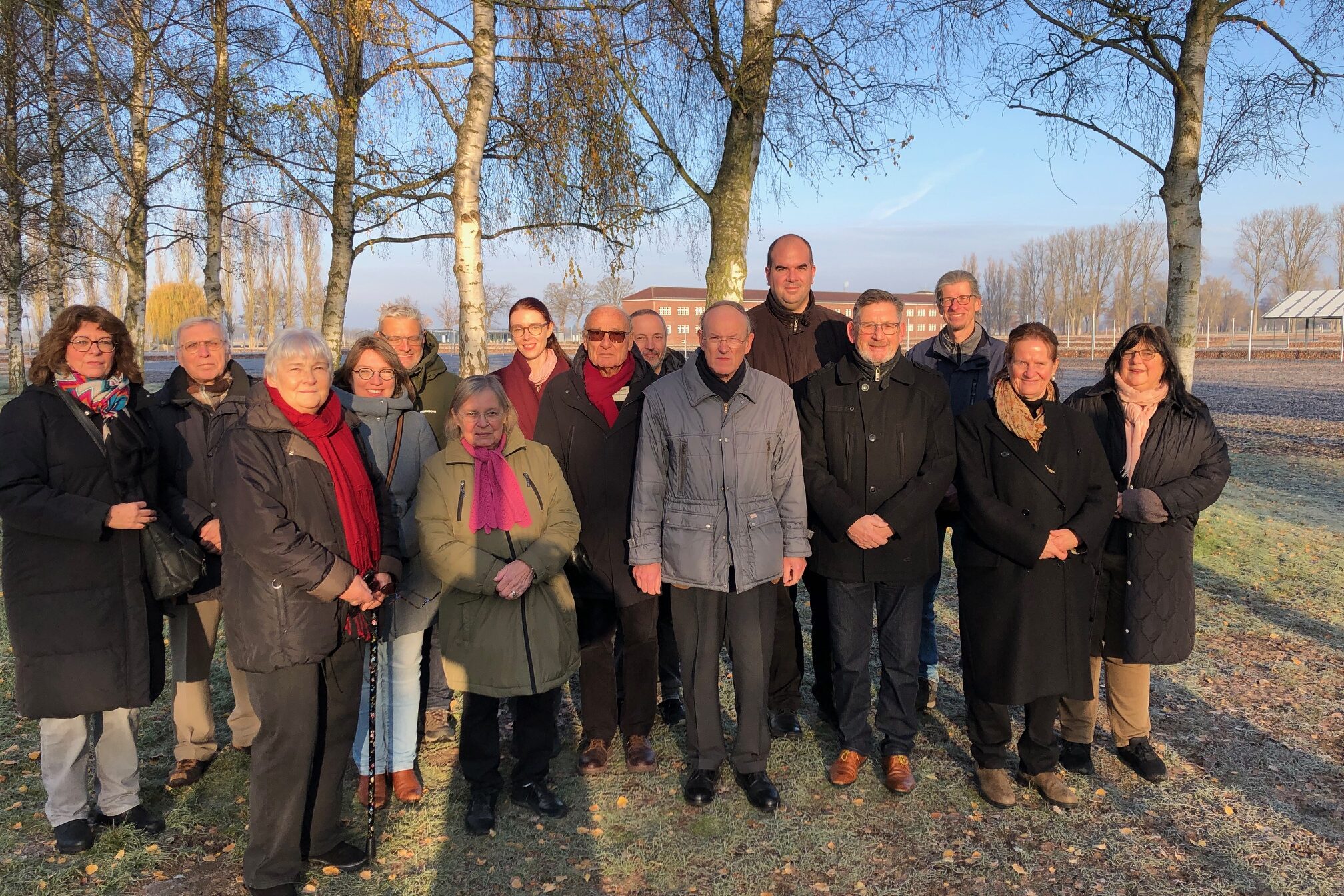
Last year, commemorative events marking the 80th anniversary of the end of the war took place in many locations. A few survivors and, above all, numerous descendants of former prisoners visited the sites of former concentration camps. Many of them are organized in associations that played a central role in establishing memorial sites at the former places of the crimes. This is also true of the Amicale Internationale KZ Neuengamme (AIN): Without this umbrella organization, founded in 1958, in which survivors of the Neuengamme concentration camp and their descendants were and remain active, the memorial site would hardly have come into being in its current form.
But what does the AIN’s work look like today? How do descendants of the persecuted commemorate the crimes, and what issues are important to them? And with what voice do they speak? What role do they play in memorial work?
Christine Eckel and Florian Jacobsen explore these questions in their podcast. In the first part, 80 years after the liberation, they look back on the history of the Neuengamme concentration camp and its aftermath. They speak with AIN partners and memorial staff about the role of descendants today. In the second part, descendants from Belgium, Denmark, France, Germany, the Netherlands, Poland, and Spain share their perspectives. They have traveled to the “Future of Remembrance” Forum, which takes place regularly in Neuengamme. At the forum, many people engage in conversation about issues of remembrance in the present. In an interview, the president and secretary-general of the AIN – whose grandfathers were prisoners at the Neuengamme concentration camp – discuss their commitment to this cause. How has this history shaped their families? Why do they speak publicly about it? What do they think about the shift to the right in Europe, and what does it mean for the remembrance of the concentration camps?
A podcast by Christine Eckel and Florian Jacobsen for the Amicale Internationale KZ Neuengamme, mostly in German. Funded by the Hamburg Ministry of Culture and Media, with support from the MOTTE Neighborhood and Cultural Center in Hamburg.
Contributors: Pieter Dekker, Marc Hivernat, Ulrike Jensen, Martine Letterie, Bruno Neurath-Wilson, Balbina Rebollar, Christian Römmer, Helle Sørensen, Greetje Van den Driessche, Kristof Van Mierop, Oliver von Wrochem, Magda Wajsen.
The podcast is available on the AIN website (where it appears as Episodes 3 and 4) and on Spotify.

Christine Eckel is a historian and volunteers with the Amicale Internationale KZ Neuengamme. She was general secretary until 2019.